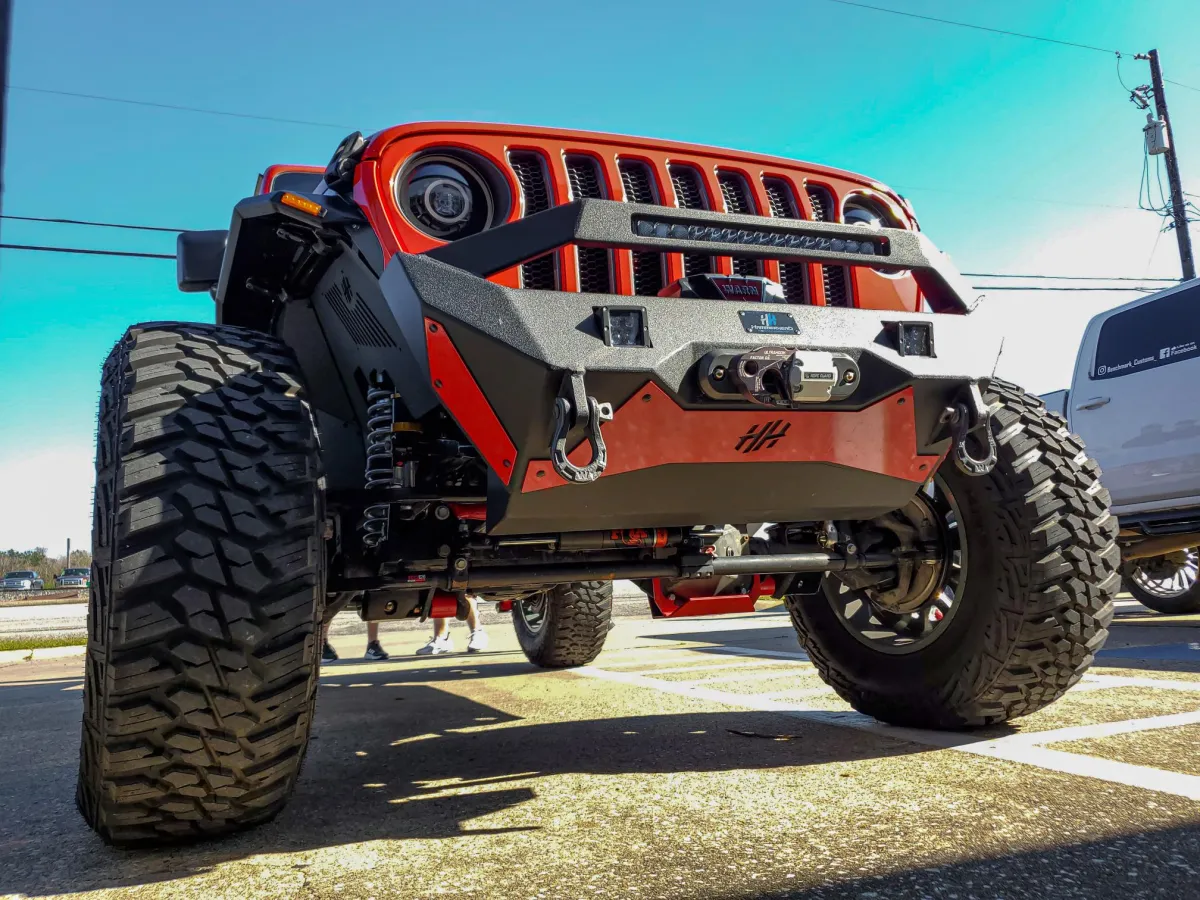
The Best Grille Guard Styles for Trucks in the Houston / Webster Region
Introduction
You pull into a job site or head down a backroad outside Houston, and your truck faces it all — flying gravel, heavy traffic, brush, and unpredictable weather. A grille guard might not be the first upgrade that comes to mind, but it’s one of the most practical additions you can make.
In the Houston and Webster region, truck owners use their vehicles for both work and recreation. A grille guard adds protection, strength, and style to match that versatility. In this guide, we’ll break down what grille guards are, the different styles available, and how to choose the one that fits your needs and driving conditions best.
Understanding Grille Guard Styles
What is a grille guard?
A grille guard is a metal framework mounted to the front of your truck that shields it from debris, minor collisions, and everyday wear. It acts as a first line of defense for your grille, headlights, and bumper — especially when driving on highways, rural roads, or worksites.
Grille guards also serve an aesthetic purpose. They give your truck a tougher, more rugged look while providing a place to mount accessories like auxiliary lights or winches.
Main grille guard styles
Before choosing one, it helps to understand the main types available. Each serves a slightly different purpose and look.
Push Bar / Bull Bar: This is the most basic style, covering the center of the truck’s front bumper. It’s lightweight and ideal for drivers who want minimal protection with a clean, bold appearance.
Full-Coverage Grille Guard: A more robust option that extends across the entire front end, including the headlights. This is perfect for rural drivers or anyone who frequently drives through brush or rugged terrain.
Modular Grille Guard: A customizable setup that lets you add or remove parts — such as light mounts, mesh inserts, or skid plates. This type gives you flexibility if you want to balance protection and aesthetics.
Why your choice matters
Your grille guard does more than look good. The style you choose affects:
Protection: A full-coverage design offers the most defense against damage.
Compatibility: Some trucks have sensors or cameras that require specific guard shapes.
Weight and balance: Larger guards add weight to the front end, which can affect handling or fuel economy.
Durability: Materials and finishes determine how long your guard lasts in humid Houston conditions.
How to Choose the Right Grille Guard in the Houston / Webster Region
Selecting the right grille guard depends on how and where you use your truck. Use the following steps to guide your decision.
Step 1: Identify your driving habits
Start by thinking about how you use your truck every week.
Do you mainly drive in the city or on highways?
Do you frequently travel to rural job sites or tow heavy equipment?
Are you looking for rugged protection or an upgrade to your truck’s appearance?
Understanding your daily driving habits helps narrow down the right level of protection and coverage.
Step 2: Match the style to your environment
Houston and Webster roads are known for their variety — from dense traffic to open countryside. The right grille guard depends on where you spend the most time.
City drivers: A push bar works great for light protection and a sleek, minimal look.
Mixed-use or rural drivers: A full-coverage or modular grille guard provides the extra defense needed for brush, gravel, and unpredictable terrain.
Weekend off-roaders: Modular systems allow you to attach accessories like light bars or skid plates for more rugged adventures.
Step 3: Choose materials and finish
Material and finish are essential for longevity. Texas humidity and coastal air can cause rust, so it’s smart to choose a corrosion-resistant coating.
Steel: Offers maximum strength and impact resistance.
Aluminum: Lightweight and rust-resistant but typically more expensive.
Powder-coated finish: Protects against scratches and corrosion — ideal for the Gulf Coast region.
Step 4: Confirm fitment and compatibility
Before purchasing, make sure your grille guard fits your specific make and model. Trucks with advanced sensors, cameras, or adaptive cruise control may need guards designed to accommodate these systems.
Step 5: Plan for professional installation
A grille guard is only as strong as its installation. Professional mounting ensures correct alignment, secure attachment, and no interference with sensors or lights. A trusted local shop can also help you select the best brand and finish for your vehicle.
Step 6: Maintain your grille guard
To keep your grille guard in top condition:
Wash it regularly to remove dirt, salt, and road grime.
Check for loose bolts or brackets every few months.
Touch up small scratches to prevent rust.
Inspect the mounting points after any off-road trip or impact.
FAQs
What’s the difference between a bull bar and a grille guard?
A bull bar covers just the center portion of the bumper, while a grille guard extends across the entire front end, including the headlights. Grille guards offer more complete protection, while bull bars focus on simplicity and style.
Will a grille guard protect my truck in a major collision?
A grille guard helps prevent damage from debris, brush, or minor impacts, but it’s not designed to replace your truck’s safety systems in a high-speed crash.
Can a grille guard affect my warranty or insurance?
Most factory warranties remain valid as long as the grille guard doesn’t require structural modifications. Some insurance providers even appreciate guards because they can reduce minor repair costs.
How much does a quality grille guard cost?
Pricing depends on size, material, brand, and finish. Push bars are the most affordable, while full-coverage and modular options cost more but offer greater protection.
Can I install it myself?
DIY installation is possible for basic models, but professional installation is strongly recommended — especially if your truck has sensors or adaptive features that need precise alignment.
Conclusion
Choosing the best grille guard style for your truck comes down to balancing protection, aesthetics, and practicality. In the Houston and Webster area, where road conditions vary from city highways to rugged worksites, a grille guard can protect your investment and enhance your truck’s look.
Whether you prefer the bold look of a push bar, the strength of a full-coverage design, or the flexibility of a modular system, working with a professional installer ensures your grille guard fits perfectly and performs as it should.
