Leveling Kits vs. Suspension Lifts: Which Is Right for You in Webster, TX
Introduction
If you drive a truck in Webster or the greater Houston area, you already know how diverse the roads can be — from smooth highways to rough job sites. You might be considering an upgrade to your truck’s stance or clearance, but you’re torn between a leveling kit and a suspension lift.
Both options can make your truck look tougher and perform better, but they serve different purposes. This guide breaks down the difference between leveling kits and suspension lifts, explains how they affect your ride, and helps you decide which one is right for your truck and driving needs.
Understanding Leveling Kits and Suspension Lifts
What is a leveling kit?
A leveling kit raises the front of your truck to match the height of the rear. Most trucks come from the factory with a slightly lower front end, called a “rake,” designed to accommodate heavy loads. A leveling kit eliminates that uneven look and provides a small boost in front-end clearance.
Typically, leveling kits raise the front end by 1 to 3 inches using spacers, torsion keys, or spring modifications. They are an affordable, quick way to achieve a balanced stance and make room for slightly larger tires.
What is a suspension lift?
A suspension lift raises both the front and rear of your truck. This upgrade replaces or modifies suspension components such as springs, shocks, and control arms to increase overall height — anywhere from 3 inches to over 8 inches.
Suspension lifts are designed for more than looks. They provide improved ground clearance, allow for significantly larger tires, and enhance off-road performance. However, they’re more complex, more expensive, and can affect handling if not installed correctly.
Why this choice matters for Webster, TX drivers
The conditions around Webster and the Houston area are unique. You’ll deal with heavy rain, uneven construction zones, and hot pavement — all of which can affect suspension wear and performance.
Choosing the right lift setup can help your truck handle local road conditions better, reduce wear, and fit your daily driving habits. Whether you’re towing, off-roading, or just improving aesthetics, the right setup ensures a smooth, safe, and long-lasting ride.
How to Decide Between a Leveling Kit and a Suspension Lift
Choosing between these two upgrades isn’t just about looks. It’s about how you use your truck and what performance you expect.
Step 1: Evaluate your driving habits
Start by identifying how you use your truck.
Do you mainly drive in town or on highways?
Do you regularly tow trailers or carry heavy loads?
Do you take your truck off-road or through rugged terrain?
Are you looking for performance improvements, appearance upgrades, or both?
Your answers will guide the type of lift that makes the most sense for you.
Step 2: Match your upgrade to your goals
Choose a leveling kit if your goal is to eliminate front-end rake, slightly increase tire size, or enhance your truck’s stance without altering ride quality.
Choose a suspension lift if you want significantly more clearance, run larger tires, or plan to use your truck for off-road driving.
A good rule of thumb: daily drivers and work trucks benefit most from leveling kits, while off-road and enthusiast builds call for suspension lifts.
Step 3: Consider cost and complexity
Leveling kits are simple, cost-effective upgrades that don’t require major modifications. Installation is quick, and they usually don’t affect factory ride comfort or geometry.
Suspension lifts, on the other hand, involve replacing or adjusting major components. They require professional installation, longer alignment time, and additional tuning to maintain safe handling and performance.
Step 4: Think about long-term use
Before deciding, consider how the lift will impact your truck over time.
Leveling kits maintain factory-like ride quality with minimal maintenance.
Suspension lifts require more upkeep, especially for vehicles driven frequently on rough terrain.
Both options may require periodic alignment checks, especially after installation or heavy use.
Step 5: Choose the right installer
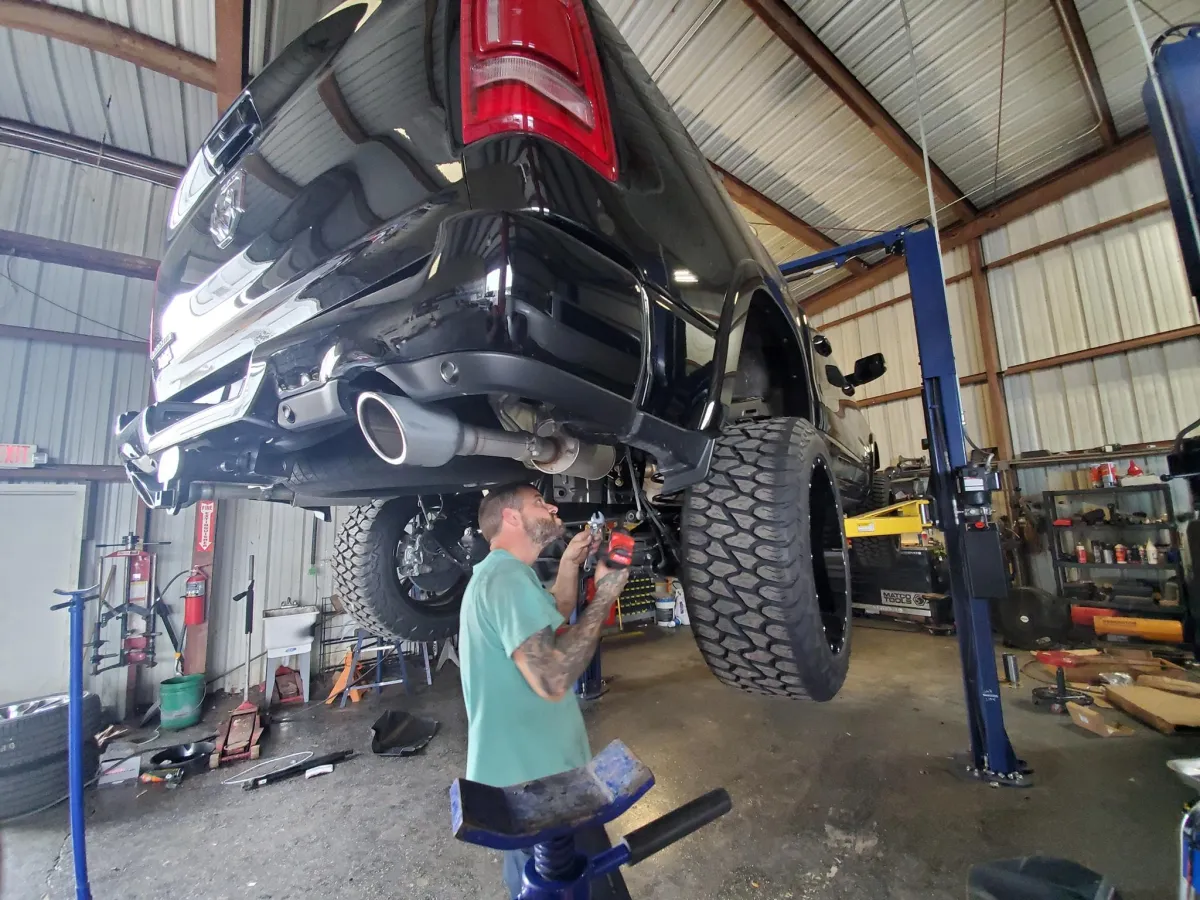
No matter which route you take, proper installation is key. Working with an experienced shop in Webster ensures your kit fits your vehicle properly, doesn’t interfere with sensors or stability systems, and meets Texas road safety standards.
FAQs
Will a leveling kit improve my truck’s off-road performance?
Slightly. A leveling kit gives you extra front-end clearance, which helps with small obstacles or uneven terrain. However, for serious off-road use, a suspension lift offers far better capability.
Does a suspension lift affect ride quality?
It can. A suspension lift alters your truck’s center of gravity and suspension geometry. High-quality parts and professional installation minimize handling changes, but expect a firmer, more elevated feel.
How much do these upgrades cost?
Leveling kits are typically budget-friendly, while suspension lifts can cost several times more depending on brand, lift height, and complexity.
Will lifting my truck affect towing or hauling?
Leveling kits generally preserve your truck’s towing capacity. Large suspension lifts may require extra reinforcement or towing accessories to maintain proper balance and control.
Can I install a leveling kit or suspension lift myself?
Some leveling kits are DIY-friendly, but suspension lifts should always be professionally installed to ensure safety, alignment accuracy, and performance integrity.
Conclusion
For most Webster, TX truck owners, the decision between a leveling kit and a suspension lift depends on lifestyle and purpose. If you’re after a cleaner stance and practical clearance for everyday driving, a leveling kit is perfect. If you want a bold look, more ground clearance, or off-road performance, a suspension lift delivers.
Either way, the right setup can transform your truck’s look, performance, and versatility — especially when installed by an experienced local shop that understands Texas driving conditions.
